



Story
When Jenna Devlin looks at her son Hendrix today — back at home, getting stronger, slowly returning to the rhythms of childhood — it’s hard to believe how recently their world revolved entirely around hospitals.
But she remembers it clearly.
“One minute we were at home in Cobourg, trying to rebuild our lives after his first cancer diagnosis,” Jenna says. “The next, we were packing bags and heading back to Toronto after learning Hendrix had relapsed. Again. We didn’t know what was coming — we just knew we had to go.”
Hendrix was five years old when his cancer returned, less than two years after his initial diagnosis. What followed was an intense stretch of treatment, uncertainty, and long days at The Hospital for Sick Children (SickKids). For Hendrix’s family, 2025 began not with plans, but with survival.
Leaving home — and finding another
Specialized pediatric cancer care meant SickKids — and that meant leaving home. Like two in three Canadian families whose children need life-saving treatment, Jenna and Hendrix had no choice but to travel far from everything familiar.
What they did have was a place ready to welcome them.
“That first night at Ronald McDonald House Toronto changed everything,” Jenna says. “It wasn’t just a place to sleep. It was safety. It was dignity. It was a place where we could just be together.”
From January through the summer of 2025, Ronald McDonald House Toronto became home — supporting Hendrix and his family through months of cancer treatment, CAR-T therapy, and additional intensive care. It was their third stay at the House, and their longest.
“If the House didn’t exist,” Jenna reflects, “we’d be separated, exhausted, trying to afford hotels, commuting back and forth. I honestly can’t imagine how families do this without it.”
Within the House, life found a fragile rhythm again. After long days at the hospital, there were warm meals waiting. Laundry got done. Routines — however small — returned.
“It’s super important to keep your family together during something like this,” Jenna says. “You’re living hour by hour. Having a consistent environment that feels like home helps you feel whole.”
A child first — even during treatment
For Hendrix, Ronald McDonald House Toronto was more than a place to stay. It was a place to be a kid.
He played on the playground with other children who understood hospital life in ways no one else could. He ran through the clubhouse, joined in sports, and looked forward to one-on-one lessons at the Ronald McDonald House Toronto School — where he felt like part of a class again.
“These are things he wouldn’t have been able to do anywhere else,” Jenna says. “Seeing him excited, seeing him just be a kid — it meant everything.”
Jenna, too, found community. Bonds formed with other parents — especially other mothers — turned overwhelming days into shared ones. “Some of those connections are still with me today,” she says.

When the hospital became everything
By summer, Hendrix’s treatment path shifted again — toward a bone marrow transplant.
Jenna became his donor.
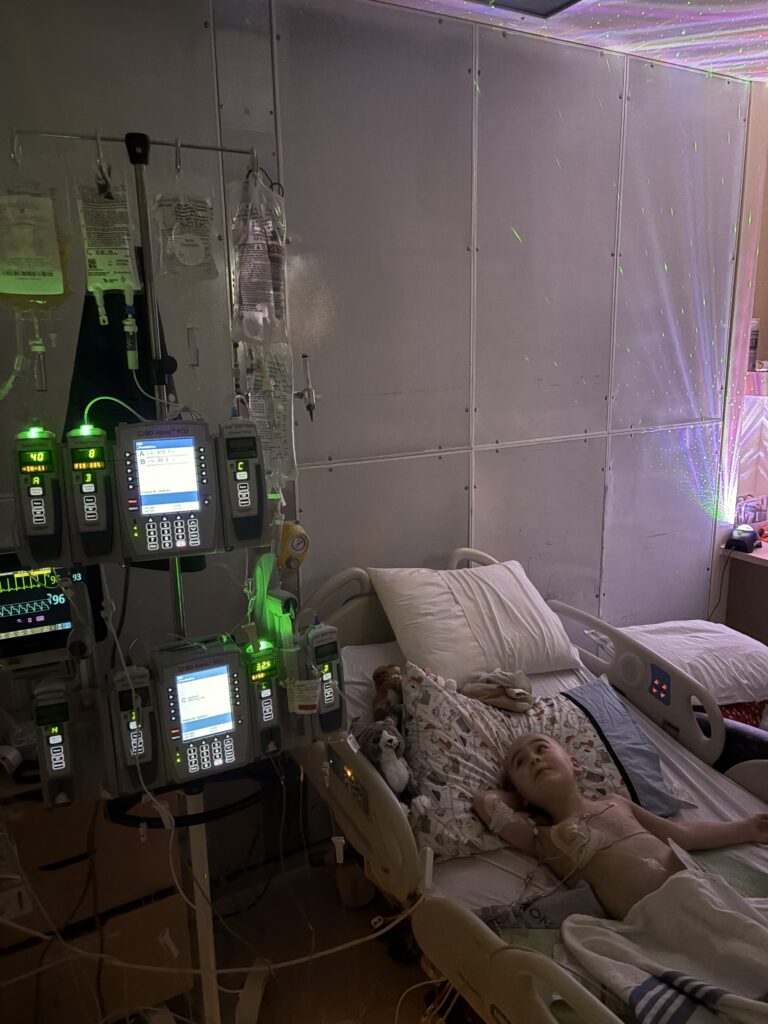
For 42 days, mother and son lived entirely inside the hospital. Twenty-one of those days were spent in strict isolation. Their world shrank to a single room — no bathroom, no shower, no privacy. Just a bed, a chair, and relentless protocols designed to keep Hendrix safe.
“You don’t realize how claustrophobic it becomes,” Jenna says. “Everything has to be sanitized. Laundry needs to be done every day. And you can’t just leave your child to take care of basic needs.”
That’s when the Ronald McDonald House Family Room at SickKids became a lifeline.
A lifeline just steps away
Morning and night, Jenna slipped away — briefly — to the Family Room.
“That was my time,” she says. “I could shower, do laundry, grab a coffee. I could feel human again — so I could go back and be there for Hendrix.”
Just steps from the transplant unit, the Family Room offered what the hospital couldn’t: space to breathe. Hot meals. Clean clothes. Quiet moments of care for the caregiver.
“You can’t leave for hours when your child is that sick,” Jenna explains. “Without the Family Room, I don’t know how I would’ve managed.”
For families living entirely within hospital walls, Family Rooms are not a convenience. They are survival.


The quiet strength of family
Throughout this journey, another constant presence was Jenna’s mother, Cathy — Hendrix’s grandmother.
“There was never a question,” Cathy says. “I just kept telling Jenna: I’m here for whatever you need.”
Cathy became the steady support behind the scenes — sitting with Hendrix so Jenna could step outside, managing laundry and meals, holding things together without asking for recognition.
“You always feel helpless when your child’s child is sick,” she says. “Loving a grandchild is a whole different love. Being here made it easier to support them both.”
At Ronald McDonald House Toronto, Cathy found support she didn’t expect. “There were days when I had to be strong for everyone,” she says. “And then there was a day when I wasn’t. I will never forget when one of the regular volunteers just hugged me and let me vent. That moment helped me keep going.”
She connected with other families — sometimes over meals, sometimes in hallways — forming bonds that continue long after their stay. “It’s a community,” she says. “You’re never really alone here.”
Home — and healing
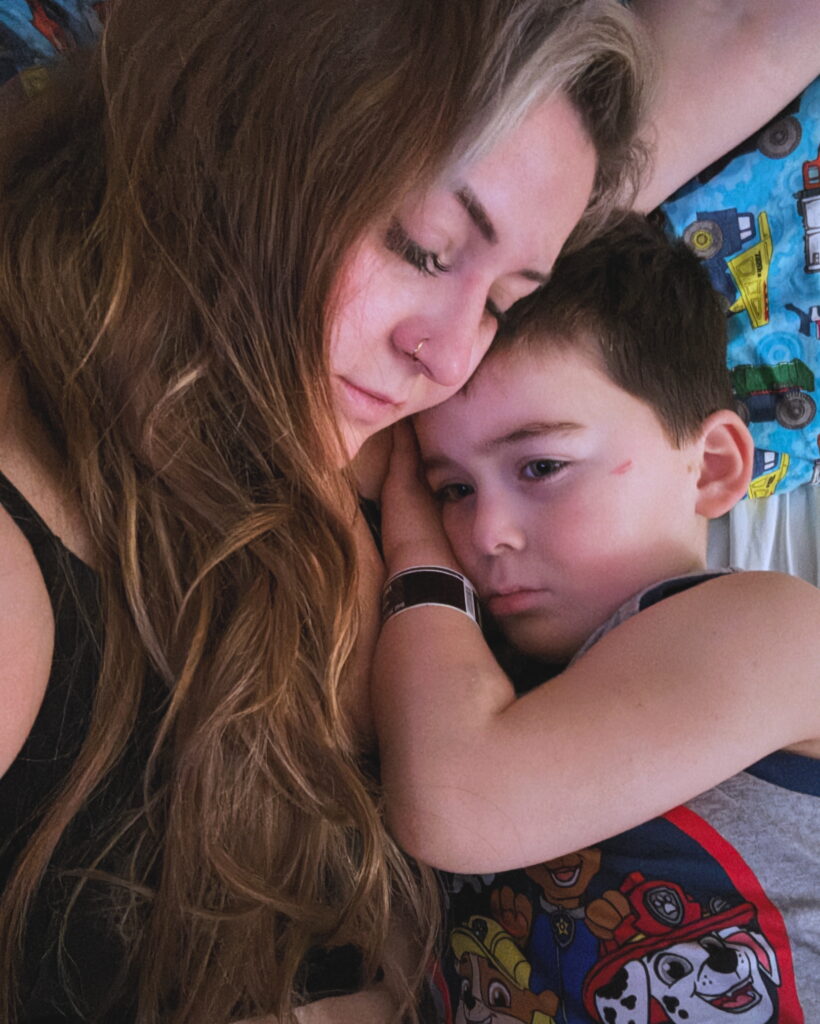
Today, Hendrix is back at home with his family.
He’s getting stronger. Re-engaging with everyday life. Reclaiming pieces of childhood that once felt so far away.
The road hasn’t been easy — and the journey isn’t something this family will ever forget. But through every phase — months at Ronald McDonald House Toronto, weeks living entirely in the hospital, and now the slow return to normal — one thing has remained constant.
“We were never alone,” Jenna says. “Ronald McDonald House Toronto and the Family Room were there when we needed them most.”
She pauses, then adds softly: “There are so many families like ours. And they need this place too.”
Because when a child is seriously ill, family doesn’t visit.
Family stays.
And thanks to Ronald McDonald House Toronto — made possible by a community of donors who believe in keeping families close — families like Jenna and Hendrix’s can stay together through the hardest days… and find their way home again.