



Story
At Ronald McDonald House Toronto School, Jermin Bates builds an education around the student. Sometimes that means sugar-cube towers. Sometimes it means three courses in six weeks.
At 12:30, Jermin Bates may be singing “The Itsy Bitsy Spider.” An hour later, she may be teaching calculus.
In between, there are students taking different courses through different school boards, assignments to untangle and teachers in other communities to contact. There are also medical appointments, fatigue and days when the plan needs to change.
“There’s a plan, but a plan is rarely set,” says Jermin, Education Program Coordinator at Ronald McDonald House Toronto. “For my high schoolers, I know what they need to get done in a week, but we go at their pace.”
That flexibility is central to EASEL — Engaging Academic, Social and Emotional Learning — the individualized education program serving students from Kindergarten through Grade 12. Through one-on-one and small-group instruction, in person or virtually, it makes room for learning when medical circumstances make a conventional school day difficult or impossible.
Making it work takes someone who can move comfortably between a nursery rhyme and an equation — and get to know the person learning each.
For one Senior Kindergarten student, the way in was construction.
He loved to build. So Jermin built his learning around it. They experimented with making concrete, constructed towers from sugar cubes and read books about building. Letters and sight words became part of construction-themed activities. Math, language and science all found a place in something he wanted to do.
“I try to make it interest-based,” she says. “Whatever they feel drawn to, we’ll create a project out of that, and that’s how we’ll learn their curriculum.”
His mother had cried tears of joy during registration. Her son was immunocompromised and could not safely be around groups of people. Without EASEL, he had no other way to attend school. Now he could learn one-on-one with Jermin, building towers and working through the curriculum.
For families arriving in Toronto for a child’s medical care, school can be another uncertainty to sort through. Some students, like this boy, need an alternative to a group classroom. A teenager may have coursework waiting back home but little energy to tackle it alone. The usual arrangements can become difficult to sustain, even when everyone wants learning to continue.

Jermin’s work involves figuring out what will make it possible.
For high school students, that often means working across the distance between Toronto and their hometown schools. Ronald McDonald House Toronto School does not grant high school credits. Students remain connected to the schools that do, while Jermin helps them work through lessons, complete assessments and manage what is ahead.
Sometimes she is teaching material designed for independent online study. Sometimes she is following up with a school board. Sometimes she is helping a teacher hundreds of kilometres away understand what a student’s day actually involves.
“I get to see them in person and experience a little bit of what they’re going through,” she says.
Matteo Totolo experienced that support while receiving treatment for lymphoma. Away from his home in St. Catharines, he completed his Grade 10 Math and Science courses with Jermin’s help. There were days when he was exhausted and the work felt overwhelming.
“She wanted me to succeed,” Matteo says. “She believed in me. I could not have done it without her.”
His words get at something a program description can struggle to convey: the relationship that makes the work possible.
“You really get to know the students and bond with them,” Jermin says. “There’s the academic part, but the social part is really important to me.”
That relationship can continue beyond a student’s time at the House.
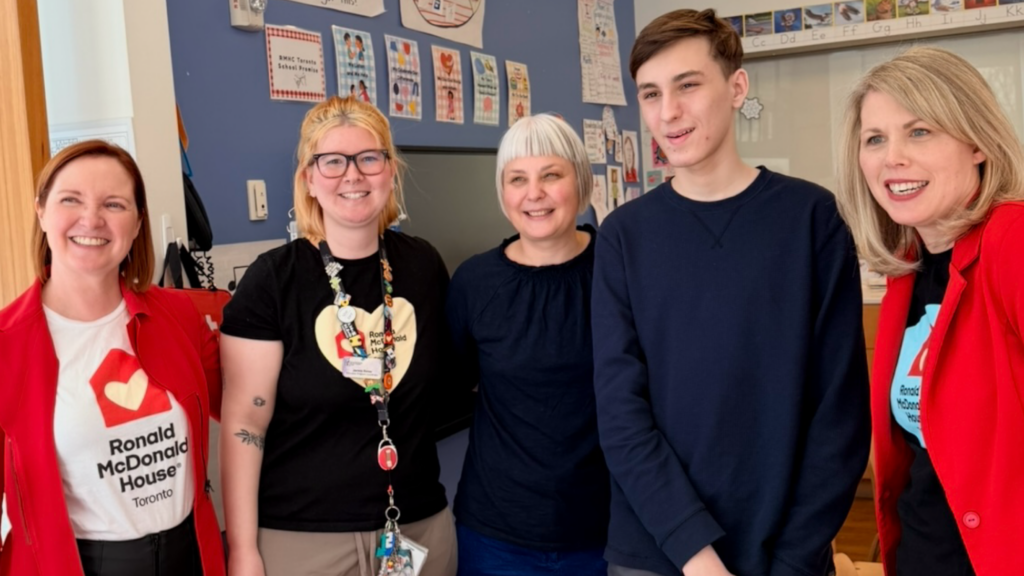
Near the end of April, one Grade 9 student began working with Jermin with three courses still to start. Treatment had delayed his schoolwork; June was approaching. He had about six weeks.
He showed up every day. Together, they worked through the material, stayed connected with his hometown school and managed the considerable workload. By the end of the term, he had completed all three courses, earning an A in each.
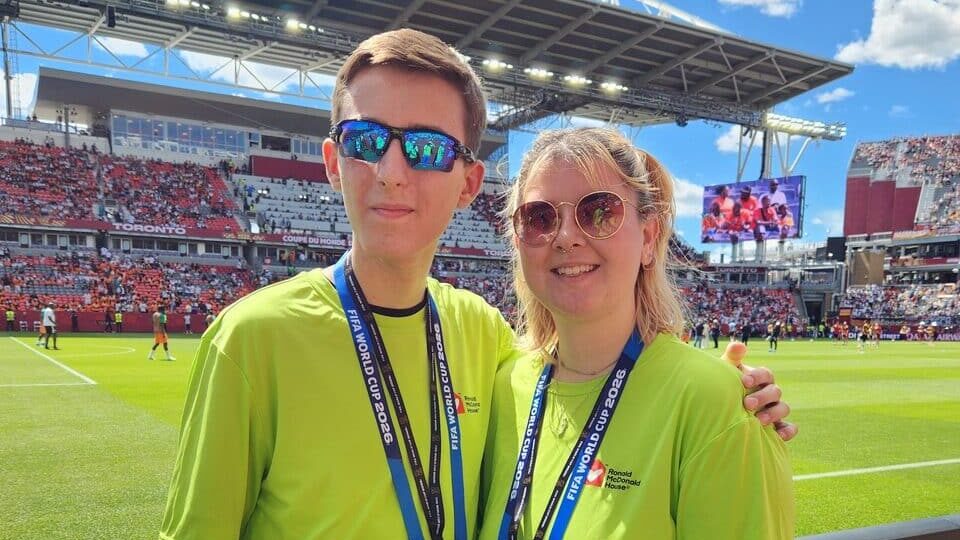
Over the summer, he took another course independently. When he finished, he emailed Jermin to tell her how it had gone.
He had completed Grade 9 without falling behind. He could begin the next school year alongside his friends.
For Jermin, the work had moved from helping him through those first assignments to receiving news of what he had accomplished on his own.
Somewhere back home, a student had finished another course — and knew exactly which teacher he wanted to tell.