



Mission
Today, we call it family-centred care.
In 1981, it was something much more radical.
The story of Ronald McDonald House Toronto begins not with a building, but with a phone call.
In late 1978, Mary Pat Armstrong received a call from her daughter’s oncologist, Dr. Peter McClure. He wanted to know if she would help bring a new concept to Toronto: a Ronald McDonald House for families with seriously ill children.
Mary Pat didn’t hesitate.
Just months earlier, she and her husband, Bob, had lost their five-year-old daughter, Marion, to leukemia after a three-year battle. Along the way, they had met countless families travelling to Toronto for treatment — families sleeping in waiting rooms, facing long commutes, and struggling with the cost of hotels while trying to remain close to their child.
They understood firsthand what families needed.
At the same time, leaders at McDonald’s Canada, including founder George Cohon, were exploring how to bring the Ronald McDonald House concept to Canada after the first House opened in Philadelphia in 1974.
Together, parents, healthcare leaders, volunteers, community champions, and supporters rallied around a simple but powerful belief:
When a child is sick, the whole family needs care.
That belief became Ronald McDonald House Toronto.
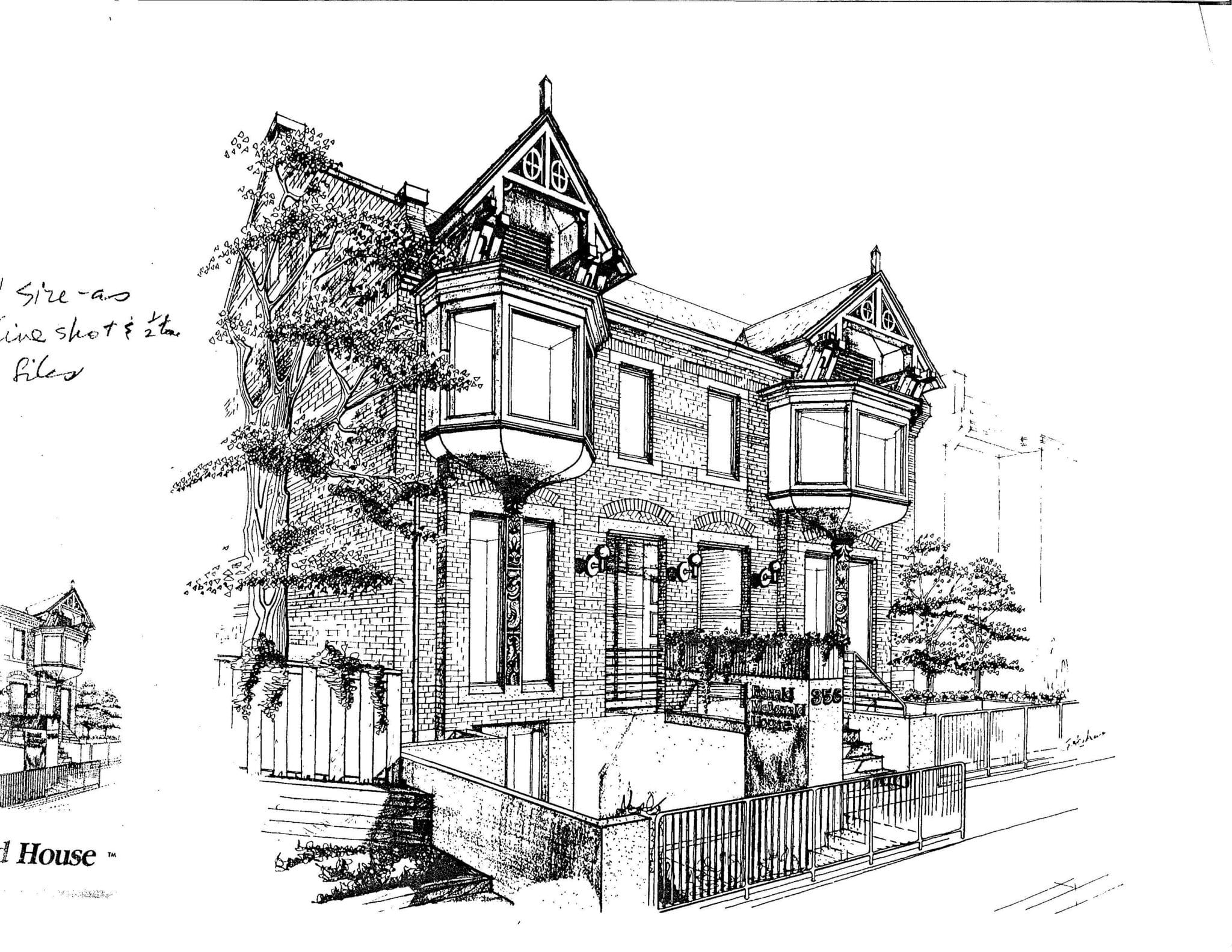
On June 14, 1981, Canada’s first Ronald McDonald House opened its doors in Toronto. With 19 bedrooms, a communal kitchen, a playroom, shared bathrooms, and a simple but powerful purpose, it offered families something they desperately needed: the ability to stay together while their child received life-saving medical care.
What began as one House serving families receiving treatment at The Hospital for Sick Children has grown into a movement.
Today, Ronald McDonald House programs support more than 32,000 families across Canada every year through 16 Houses and 21 in-hospital Family Rooms. Here in Toronto, Ronald McDonald House Toronto operates an 81-bedroom House and seven Family Rooms embedded within hospitals across the Greater Toronto Area and Sudbury.
The spaces have changed.
The treatments have changed.
The needs of families have not.
One of the most remarkable things about looking back through the earliest records of Ronald McDonald House Toronto is how familiar they feel.
In the first years of operation, families arrived tired, worried, frightened, and uncertain about what came next. They needed a place to sleep. A hot meal. A cup of coffee with someone who understood. A moment to breathe.
Forty-five years later, families still arrive carrying many of those same needs.
The difference is that the medical journeys they are navigating have become longer and more complex than ever before.
Today, children are surviving illnesses and conditions that would have been unimaginable a generation ago. Medical advances are creating new possibilities and new hope. But those advances often require families to remain close to care for weeks, months, and sometimes longer.
Last year, 4,724 families found care, comfort, and support through Ronald McDonald House Toronto and seven Ronald McDonald House Family Rooms. Families stayed an average of 38 days, reflecting the growing complexity of pediatric care journeys. Across the House and Family Rooms, families experienced more than 31,000 nights of comfort, made nearly 69,000 Family Room visits, and shared almost 29,000 meals while remaining close to their child’s care and to one another. Behind every one of those numbers is a family trying to stay strong together.
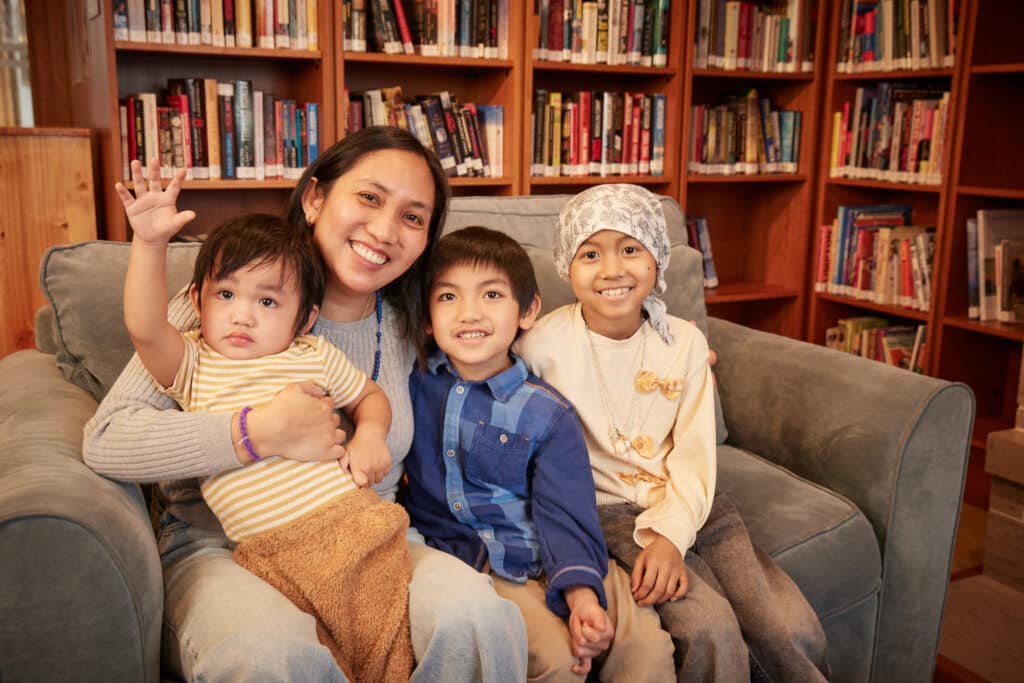
While her daughter Kursten receives treatment for Ewing sarcoma, Kriszella Canonigo and her family have found support, community, and stability at Ronald McDonald House Toronto.
“Being together has become the foundation of everything,” Kriszella says. “It’s everything for us. It gives my kids happiness and strength, and it gives me hope and courage.”
Her words capture the heart of this mission as clearly today as they would have 45 years ago.
The founders of Ronald McDonald House Toronto understood something that research now confirms: families do better when they can stay together.
Children feel better.
Caregivers cope better.
Families remain stronger.
That vision was brought to life by an extraordinary community of founders, volunteers, healthcare leaders, supporters, and partners who believed families deserved more than a hospital waiting room or a long drive home at the end of an impossible day.
People like Mary Pat Armstrong, who served as Chair of the inaugural Board of Directors, helped transform an ambitious idea into a lasting reality. Reflecting on those early years, Mary Pat often reminds people that no one built Ronald McDonald House alone.
“It always took a great team,” she says. “We all worked together.”
Visionaries like George Cohon, founder of McDonald’s Canada and one of the key champions behind bringing the Ronald McDonald House concept to Canada, helped ensure that Ronald McDonald House would become more than a place to stay. It would become a place of warmth, community, generosity, and hope.
As George once said: “When a child is sick, what they need most is their family. They need to be together.”
Their legacy lives on every day.
It lives on in the therapy dogs that bring comfort to children and caregivers.
It lives on in volunteers serving meals.
It lives on in Ronald McDonald House Family Rooms where parents find a quiet place to rest just steps from their child’s bedside.
It lives on in every family who discovers they are not alone.
Forty-five years later, Ronald McDonald House Toronto remains rooted in the same belief that inspired its founders:
When a child is sick, the whole family needs care.
The language may have changed.
Today, we call it family-centred care.
But the idea remains exactly the same.
And thanks to the thousands of donors, volunteers, partners, McDonald’s Owner/Operators, healthcare leaders, staff members, and families who continue to carry this mission forward, that idea continues to change lives every day.
Because family belongs together.
And when families stay together, they stay strong.